Health Decision Technologies

Your partner from insight to outcomes.

Since 2010, we have built health technology that performs in real-world care settings — without losing clinical or behavioral fidelity.

Our development pathway

  • 01
    Discovery & Research Design Grounded in clinical evidence, behavioral theory, and stakeholder co-design
  • 02
    Prototype & Rapid Iteration Functional builds evaluated early with clinical partners
  • 03
    Field Trial & Validation IRB-compliant studies measuring outcomes that matter clinically
  • 04
    Commercial Deployment HIPAA/HITRUST-compliant systems built for institutional-scale use

Technology built for
clinical contexts

We bring deep expertise across the full product lifecycle — from research-backed design through HIPAA-compliant deployment — as dedicated technology partners to institutions driving health outcomes.

01

AI-Powered Clinical Tools

Conversational AI companions, decision support systems, and RAG-grounded clinical content engines built on evidence-based frameworks and validated in real care contexts.

LLM / RAG Guardrails EMR Integration

02

Mobile Health Applications

Native and cross-platform mobile tools for behavior change, chronic disease self-management, survivorship support, and clinical research data collection — with published peer-reviewed outcomes.

iOS / Android React Native mHealth

03

Grant-Funded Research Technology

Technology design and development as prime or sub-awardee on NIH and federally funded projects. We bridge the gap between research hypotheses and deployable digital tools.

NIH SBIR / STTR IRB-Ready

04

EMR & Systems Integration

Interoperability-first architecture integrating with EHR systems and institutional data environments. HIPAA-compliant, HITRUST-aligned, and designed for clinical workflow realities.

FHIR / HL7 HIPAA HITRUST

05

Product Strategy & Roadmapping

Structured transition pathways from initial concept through clinical validation to institutional deployment. We provide the product leadership function that academic organizations often lack internally.

Prototype → Launch Co-design

06

Community & Public Health Tech

Digital tools designed for community health workers, rural care sites, and public health agencies — built with the access, literacy, and resource constraints of real-world settings in mind.

Community Health Health Equity Rural

Work that demonstrates measurable impact

Representative examples of our work — full case studies available upon request for qualified institutional partners.

01

University of Colorado Anschutz Medical Campus

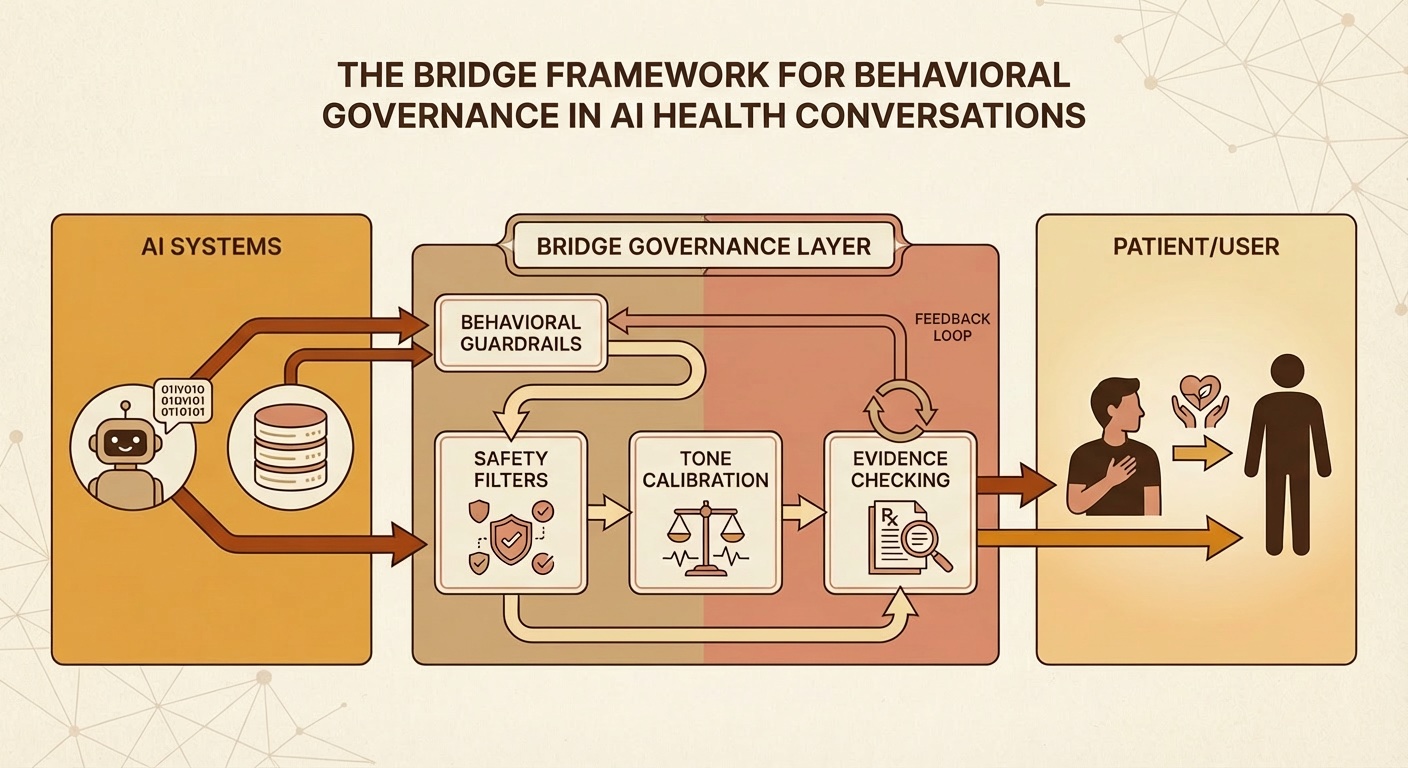
BRIDGE: A Behavioral Governance Layer for AI-Mediated Health Conversations
BRIDGE diagram

BRIDGE is a behavioral governance layer that ensures AI-mediated conversations adhere to defined behavioral intervention methodologies. It operates between the user-facing application and the underlying language model, applying explicit behavioral rules that govern how responses are structured, sequenced, and delivered.

BRIDGE does not replace the language model — it constrains and guides model behavior so that each interaction maintains fidelity to established communication frameworks such as motivational interviewing, shared decision-making, and other evidence-based behavioral support approaches. BRIDGE is the governance engine underlying CLaiRE, HDT's lung cancer survivorship AI companion, and is designed as a standalone framework applicable across behavioral health contexts.

BRIDGE Developer Kit

A self-contained deployment package for running the BRIDGE behavioral governance engine in local or controlled environments — without dependency on external prompt management services. The DK enables reproducible, auditable operation of retrieval-augmented generation, communication guardrails, simplification, crisis detection, and a four-condition experimental configuration (LLM-only, LLM+BRIDGE, RAG-only, RAG+BRIDGE). Intended for research, evaluation, and prototype development environments.

Behavioral Governance RAG Motivational Interviewing Shared Decision-Making Developer Kit Experimental Config
02

Kentucky LEADS Collaborative · University of Kentucky · University of Louisville · Lung Cancer Alliance

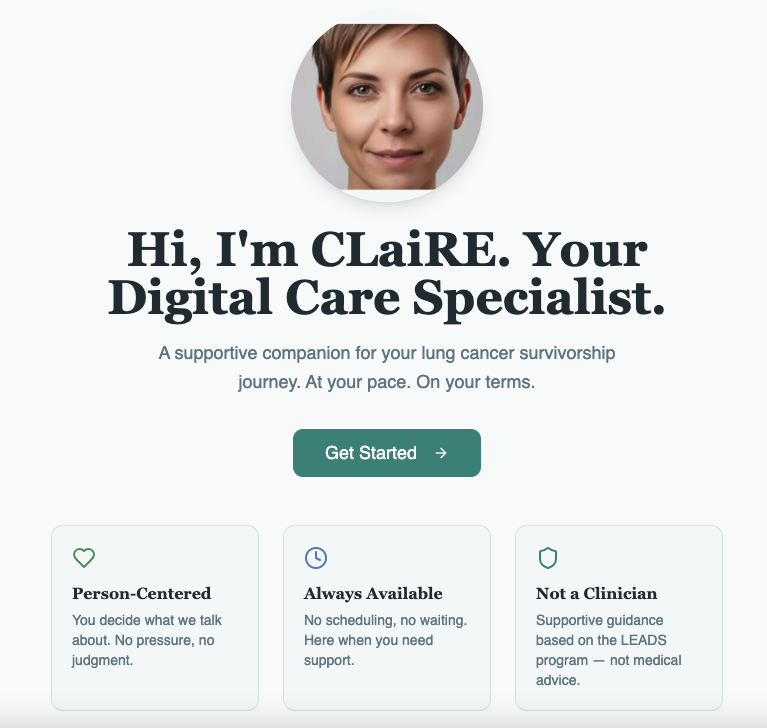
CLaiRE: A Digital Care Specialist Supporting Lung Cancer Survivors
CLaiRE digital care specialist

RAG-powered conversational AI with animated 3D avatar supporting lung cancer survivors through symptom monitoring, psychosocial support, and shared decision-making. A multi-stage guardrails pipeline enforces empathy, non-stigmatizing language, and motivational interviewing principles throughout every interaction.

CLaiRE is designed to address a critical workforce resource gap in rural health settings — bringing evidence-based survivorship support to communities where dedicated care specialists are scarce or unavailable.

AI Companion 3D Avatar Rural Health Survivorship LEADS Model
03

Lungevity  ·  University of Kentucky Markey Cancer Center  ·  Moffitt Cancer Center

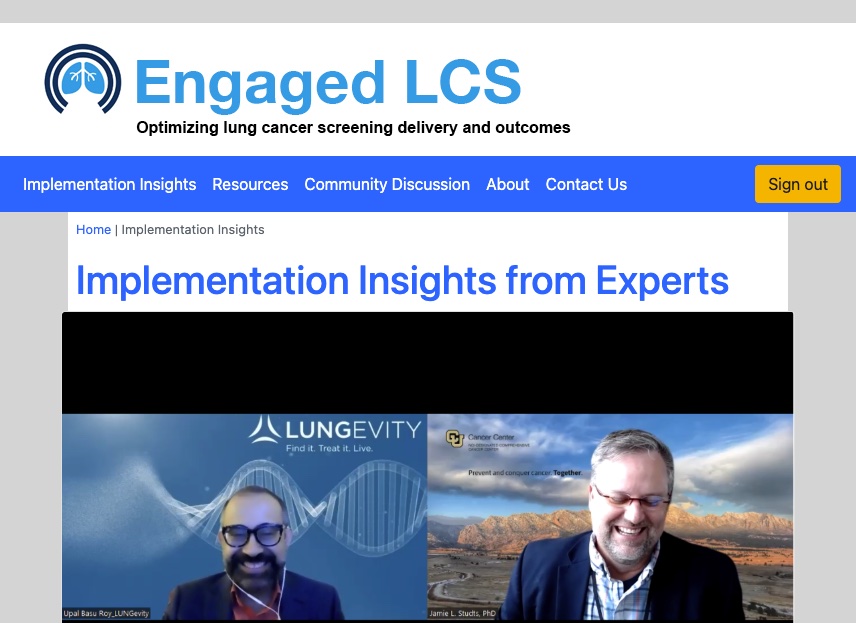
Engaged LCS: Optimizing Lung Cancer Screening Delivery and Outcomes
Engaged LCS screening framework

The Engaged Approach to Lung Cancer Screening (Engaged LCS) is a framework and toolkit of materials and strategies developed through Project ACTS research, adopting a person-centered approach to lung cancer screening (LCS). The research targets adherence across each key behavioral stage: initial show/no-show rates, follow-up for identified nodules, and annual screening.

HDT supported Project ACTS through site development and hosting, providing the digital infrastructure for a multi-site research program spanning leading cancer research institutions.

Lung Cancer Screening Person-Centered Behavioral Adherence Site Development Multi-site Research
04

University of Virginia Ryan White Clinic  ·  Virginia Department of Health  ·  AIDS United  ·  M·A·C AIDS Fund

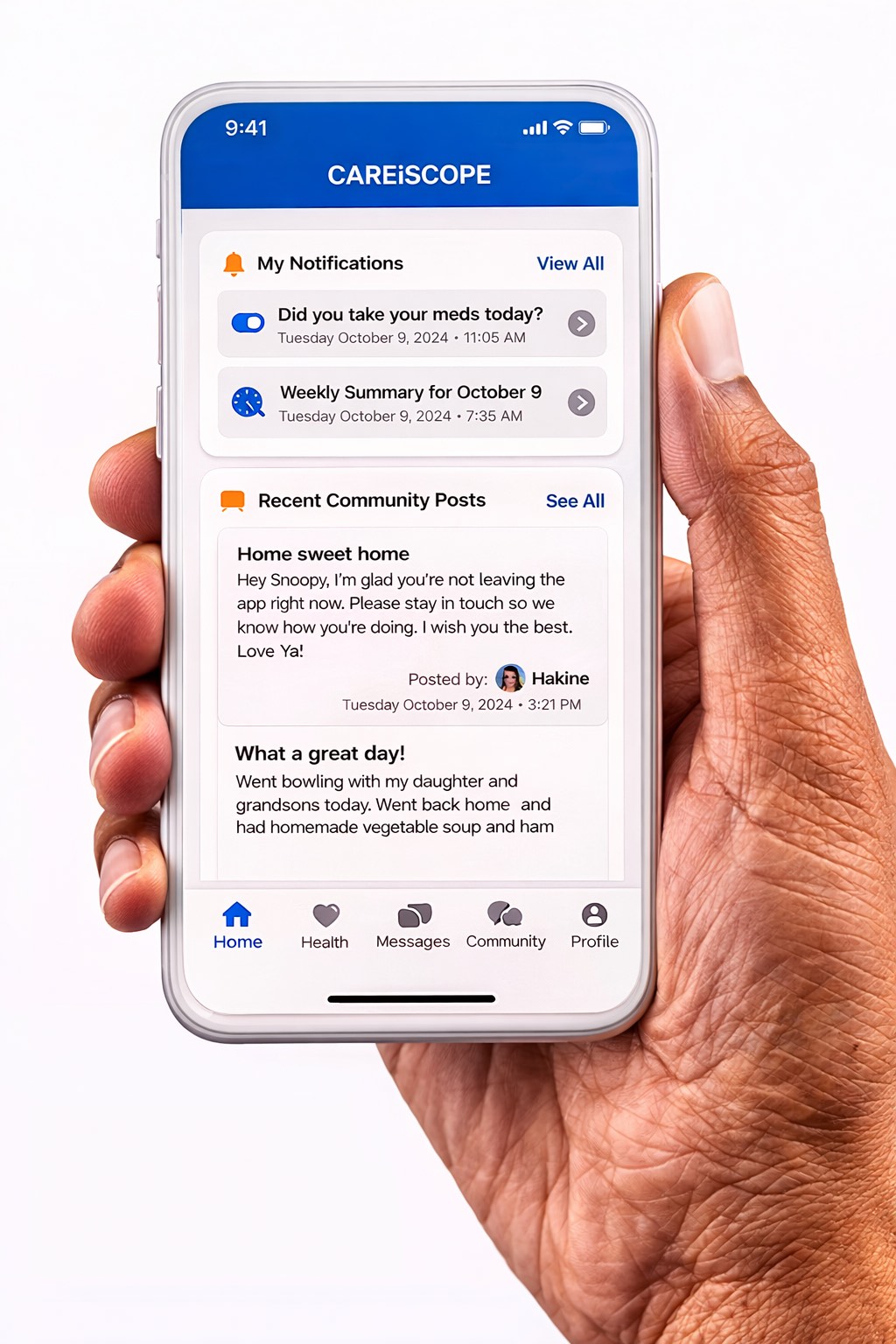
CAREiSCOPE: Chronic Health Management Through Smart Technology
CAREiSCOPE platform

CAREiSCOPE is a HIPAA-compliant, cloud-based chronic health management platform comprising a smartphone app (iOS and Android), patient dashboards, and administrative portals. The platform checks in with members daily — querying mood, stress, and medication adherence through personalized notifications, appointment reminders, and secure messaging — while giving care teams dynamic dashboards, predictive analytics, and optional EMR integration for remote care management.

CAREiSCOPE delivers significant improvement in retention in care, appointment constancy, and medication adherence across diverse patient demographics. Pilot studies in HIV management demonstrated a +119% increase in visit constancy at 12 months, +67% improvement in retention in care, +64% viral suppression, and a 17× prevention ROI — averting more than $1.8M annually per 100 members.

Origin · PositiveLinks

CAREiSCOPE originated as PositiveLinks, developed by HDT founder George Reynolds in collaboration with Rebecca Dillingham M.D., M.P.H. and Karen Ingersoll Ph.D. at the University of Virginia Ryan White Clinic, with support from AIDS United and the M·A·C AIDS Fund. A broader implementation integrating automated patient lab values and appointment data was funded by the Virginia Department of Health. PositiveLinks was so effective at the UVa Ryan White Clinic that it became a component of usual care. HDT launched it commercially as CAREiSCOPE in 2019.


HIV Management Chronic Disease Mobile Health Medication Adherence EMR Integration Peer Support HIPAA 50+ Languages

Trusted by leading academic
and public health institutions

We work as embedded technology partners — not vendors — within the research and clinical missions of our institutional collaborators.

Academic Medical Center

University of Colorado Anschutz Medical Campus

Institutional partner for BRIDGE — a behavioral governance framework for AI-mediated health conversations across behavioral and chronic disease contexts.

Federal Funder

National Institutes of Health

Prime awardee on NIH grants and contracts across four institutes — NIDCR, NCI, NIDDK, and NIDA.

Cancer Research · Multi-site

Lungevity  ·  UK Markey Cancer Center  ·  Moffitt Cancer Center

Investigator institutions for Project ACTS and the Engaged LCS framework — a person-centered approach to lung cancer screening adherence.

Cancer Research Collaborative

Kentucky LEADS Collaborative

Partnership between the University of Kentucky, University of Louisville, and the Lung Cancer Alliance.

Academic Medicine & Public Health

University of Virginia Ryan White Clinic  ·  Virginia Dept. of Health

Original research and implementation partners for PositiveLinks — the HIV retention-in-care program that became CAREiSCOPE and is now part of usual care at UVa.

Additional partnerships
available upon inquiry

Publications & Citations

Selected peer-reviewed publications from HDT's research collaborations in digital health, mobile intervention, and HIV care engagement.

2018

PositiveLinks: a mobile health intervention for retention in HIV care and clinical outcomes with 12-month follow-up

R Dillingham, K Ingersoll, TE Flickinger, AL Waldman, M Grabowski, et al.

AIDS Patient Care and STDs, 32(6), 241–250

147

Citations

2017

Social support in a virtual community: analysis of a clinic-affiliated online support group for persons living with HIV/AIDS

TE Flickinger, C DeBolt, AL Waldman, G Reynolds, WF Cohn, MC Beach, et al.

AIDS and Behavior, 21(11), 3087–3099

105

Citations

2015

Pilot RCT of bidirectional text messaging for ART adherence among nonurban substance users with HIV

KS Ingersoll, RA Dillingham, JE Hettema, M Conaway, J Freeman, et al.

Health Psychology, 34(S), 1305

87

Citations

2014

Development of a personalized bidirectional text messaging tool for HIV adherence assessment and intervention among substance abusers

K Ingersoll, R Dillingham, G Reynolds, J Hettema, J Freeman, et al.

Journal of Substance Abuse Treatment, 46(1), 66–73

75

Citations

2019

Development of PositiveLinks: a mobile phone app to promote linkage and retention in care for people with HIV

C Laurence, E Wispelwey, TE Flickinger, M Grabowski, AL Waldman, et al.

JMIR Formative Research, 3(1), e11578

57

Citations

2018

Addressing stigma through a virtual community for people living with HIV: a mixed methods study of the PositiveLinks mobile health intervention

TE Flickinger, C DeBolt, A Xie, A Kosmacki, M Grabowski, AL Waldman, et al.

AIDS and Behavior, 22(10), 3395–3406

56

Citations

2020

Long term impact of PositiveLinks: Clinic-deployed mobile technology to improve engagement with HIV care

CE Canan, ME Waselewski, ALD Waldman, G Reynolds, TE Flickinger, et al.

PLoS One, 15(1), e0226870

46

Citations

2016

Content analysis and user characteristics of a smartphone-based online support group for people living with HIV

TE Flickinger, C DeBolt, E Wispelwey, C Laurence, E Plews-Ogan, et al.

Telemedicine and e-Health, 22(9), 746–754

24

Citations

2019

Feasibility of collecting saliva for biological verification of tobacco use status in dental practices and patients' homes: results from the National Dental PBRN

WW Stoops, MF Johnson, JC Strickland, HK Knudsen, GH Gilbert, et al.

Community Dental Health, 36(3), 187–189

5

Citations

2017

Conducting Applied Tobacco Control Research with SBIR/STTR Funding: An Academic-Industry Partnership

JL Studts, H Knudsen, G Reynolds

Annals of Behavioral Medicine, 51, S375–S375

2013

Process Analysis of a Bidirectional Personalized Text Messaging Adherence Intervention for Rural HIV+ Drug Users

KS Ingersoll, R Dillingham, G Reynolds, J Hettema, J Freeman, et al.

Journal of Substance Abuse Treatment, 46(1), 66–73

Let's discuss
your project

Whether you're an academic research team, a public health agency, or a health technology organization — we'd love to work together.

Location

Oakland, California

Email

info@healthdecisiontechnologies.com